A customer request tracking system should make the next action clear to customers, staff, and managers without exposing information that belongs only to internal operations.
The system may handle service requests, applications, architectural reviews, support concerns, document submissions, booking changes, or other structured work.
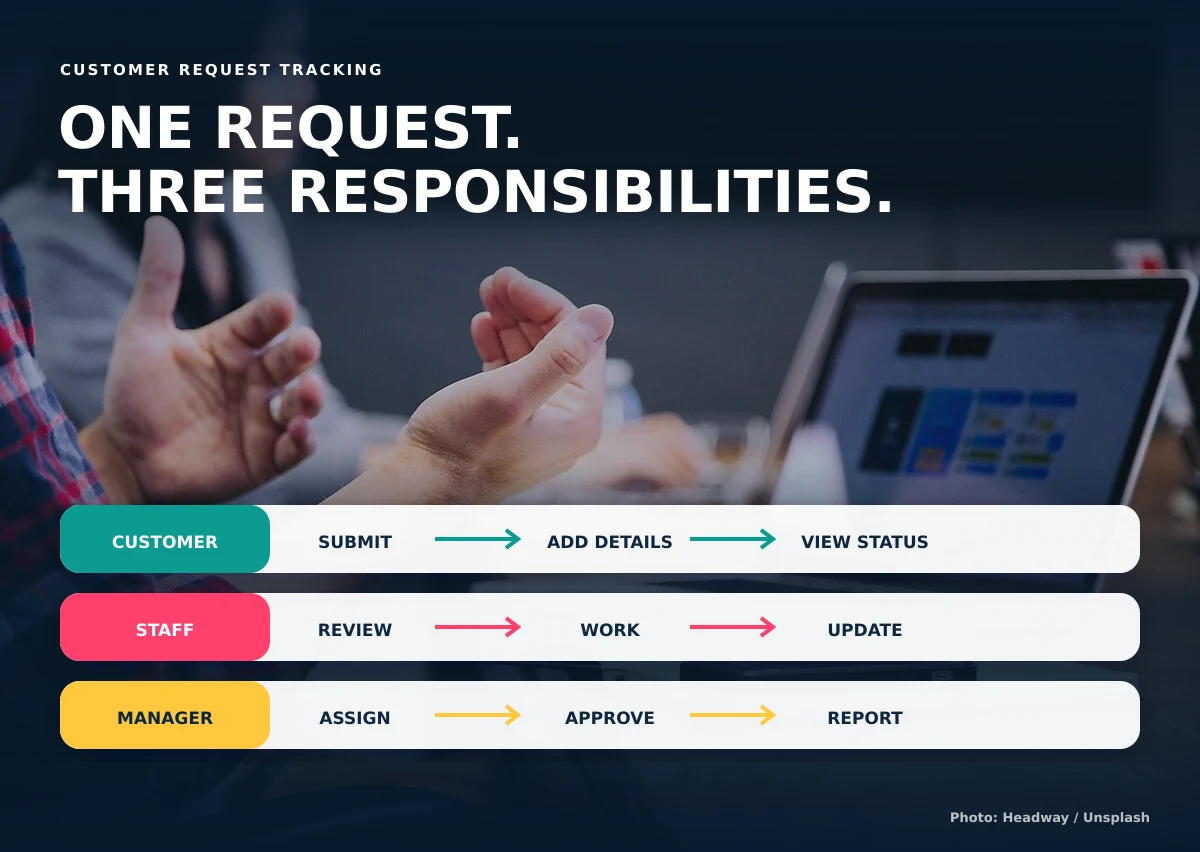
Begin with a structured request
Ask for the information needed to route and review the request. Use a request type, customer or account, description, relevant dates, attachments, and preferred contact method. Avoid one large free-text box when specific fields would prevent follow-up questions.
Create one record and reference number
The customer, staff, messages, files, decisions, and statuses should remain connected to the same request. A reference number makes future communication easier without creating duplicate records.
Assign responsibility and service expectations
Route the request to a team or person based on type, location, property, schedule, or another rule. Record the target response or review date where the business has one.
Use statuses that describe real conditions
Good statuses include submitted, needs information, under review, approved, scheduled, in progress, completed, declined, and cancelled. Avoid vague labels such as pending when nobody knows what it is pending for.
Keep public updates separate from internal notes
Customers should see helpful progress information, requests for action, and appropriate decisions. Internal notes may include assignments, operational discussion, risk, or manager comments that should remain private.
Record approvals and completion evidence
If a manager or reviewer must approve the work, record the decision, person, time, and relevant conditions. Completion may include a final note, attached document, delivery confirmation, or customer acknowledgment.
Report where requests slow down
Track volume by type, unassigned requests, overdue next actions, average time by stage, reopened items, and common reasons for missing information. Use the findings to improve the process rather than only judging individual staff.
Notifications should prompt an action or communicate a meaningful change. Confirm receipt when a customer submits the request, notify the assigned team when work begins, ask the customer when information is missing, and communicate an appropriate final decision. Avoid sending a message for every internal note or assignment change. Too many low-value alerts make important requests easier to miss.
Before replacing the current process, test the workflow with ordinary and difficult cases. Include a request missing a document, one requiring manager approval, one transferred between teams, one cancelled by the customer, and one reopened after completion. Check that the activity history remains understandable and that reports count each case correctly. A tracking system is successful when people can answer who owns the request, what is needed next, and how long it has been waiting without searching through messages.
Define a small set of service measures before launch. Useful examples include first-response time, time awaiting customer information, review time, completion time, overdue actions, and reopened requests. Measure waiting stages separately so the report explains where delays occur instead of hiding everything inside one average.
Causing Designs builds customer portals and staff dashboards that keep every request connected to its account and activity history.
To plan a customer request tracking system, show us one real request from submission to completion.