A lead follow-up workflow prevents promising inquiries from disappearing inside inboxes, chat threads, notebooks, and personal calendars.
The goal is not to send more reminders. It is to make responsibility visible and ensure every active lead has a useful next action.
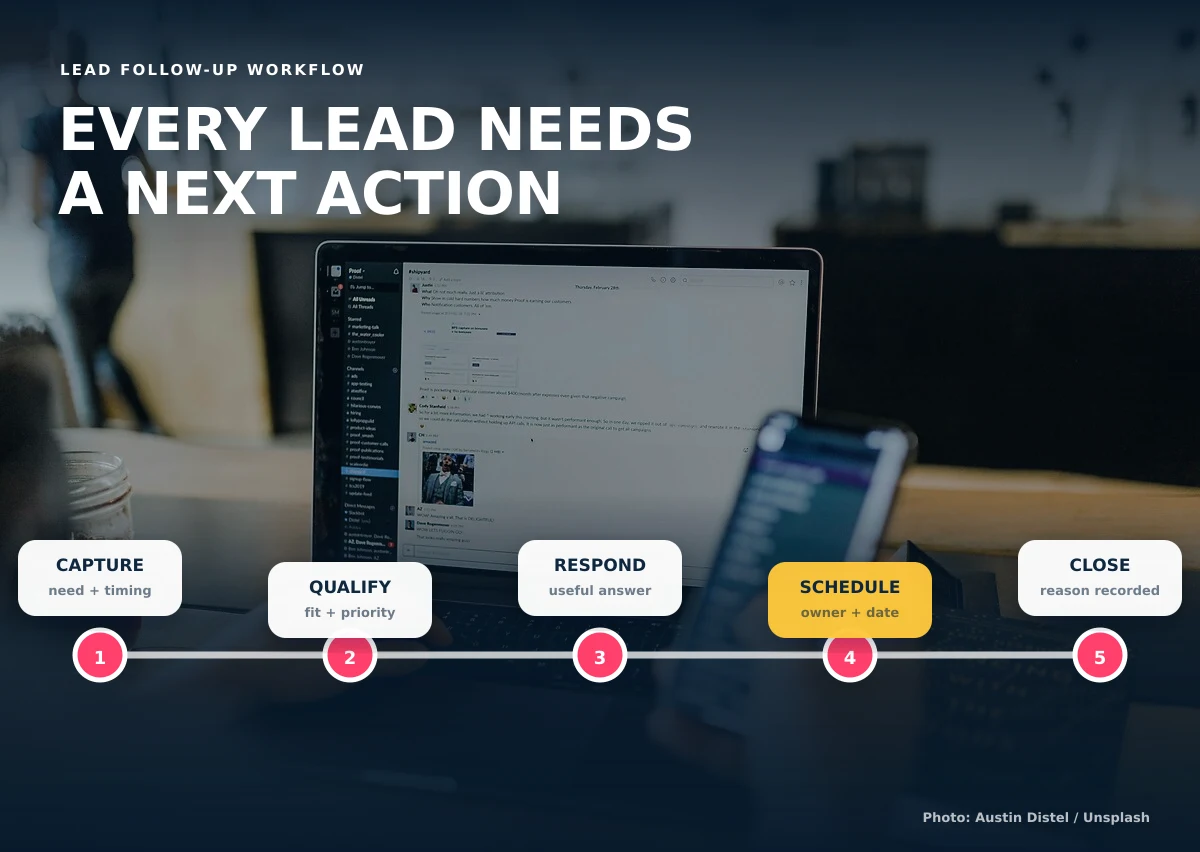
1. Capture the source and actual need
Record where the inquiry came from, what the prospect needs, the relevant service or location, the preferred timing, and the best contact method. Preserve the original message while organizing the key facts.
2. Assign one responsible owner
Several people may contribute, but one person should be accountable for the next response. Ownership prevents duplicate replies and makes overdue work visible.
3. Respond with a clear purpose
A useful response answers a question, requests specific missing details, proposes a next step, or explains fit. Generic “just following up” messages add little value when the prospect still lacks information.
4. Schedule the next action immediately
After every meaningful contact, record the next action and date. Examples include preparing a quotation, calling after a decision meeting, requesting a document, or checking availability.
5. Close with an understandable reason
Leads should not remain active forever. Use clear outcomes such as won, not a fit, no response after the agreed sequence, postponed, budget timing, or future opportunity. These reasons improve reporting and future decisions.
A simple lead record should include
- Contact and company information
- Inquiry source
- Need, timing, and location
- Assigned owner
- Current status
- Last completed action
- Next action and due date
- Quotation or proposal history
- Final outcome and reason
Measure the process, not just the total leads
Useful measures include first-response time, leads waiting for action, quotation turnaround, follow-up completion, conversion by source, and common loss reasons. A small set of reliable measures is better than a dashboard full of uncertain numbers.
Set an achievable service rule for every active stage. A new inquiry might require an initial response within one business day, while a qualified lead awaiting a supplier quotation may need a different follow-up interval. Pause or change the due date only with a recorded reason. Managers can then distinguish a genuinely blocked opportunity from one that simply has no owner or next action.
A weekly review should focus on decisions, not reading every note. Look at unassigned inquiries, overdue next actions, quotations waiting for customer response, high-value opportunities without recent activity, and leads that have remained in one stage too long. Confirm the next action or close the record with an understandable reason. Over time, compare outcomes by inquiry source, service type, response speed, and loss reason to improve both marketing and operations.
Prepare a few follow-up templates for common situations, but personalize the details and next step. The system can remind staff and preserve history; it should not send an aggressive sequence regardless of customer context. Record communication preferences and stop routine follow-up when the contact declines, the opportunity closes, or applicable consent and privacy rules require it.
Causing Designs builds focused CRM and workflow dashboards for businesses that need more than a shared spreadsheet.
If your current lead follow-up workflow depends on memory, show us how inquiries move through your team.