The best way to plan a custom business system is to begin with the work people already perform. Starting with a long feature wishlist often produces expensive software that does not solve the main operational problem.
This five-step roadmap helps a growing business define a practical first release, reduce unnecessary scope, and give developers clearer requirements.
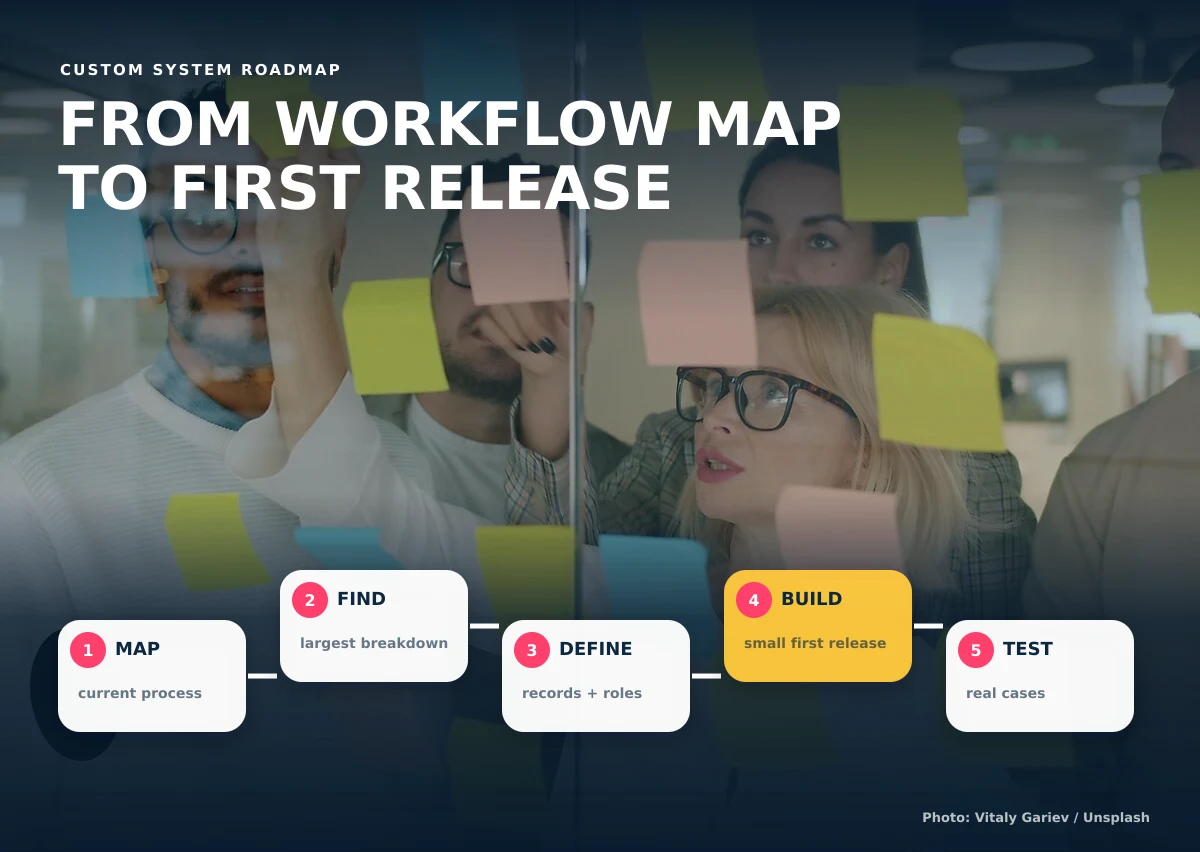
1. Map the current workflow honestly
Follow one real request from beginning to end. Record where it arrives, who handles it, what information is required, which decisions occur, where customers wait, and how completion is confirmed. Include unofficial steps performed through chat, paper, or personal spreadsheets.
2. Choose the most valuable breakdown to fix
Do not solve every inconvenience at once. Prioritize the breakdown that creates the most lost time, missed revenue, repeated work, customer frustration, or operational risk. A clear priority gives the first release a measurable purpose.
3. Define records, roles, and rules
Identify the main records, such as customers, orders, bookings, properties, payments, requests, or documents. Then define who can view or change each record and which steps must happen before the next action becomes available.
4. Build the smallest useful first release
The first release should complete one meaningful workflow. It may include intake, assignment, status tracking, essential documents, and a focused report while leaving advanced integrations for later.
- Must have: required to complete the target workflow
- Should have: valuable but can follow after launch
- Could have: useful only after adoption is proven
- Not now: unrelated to the first measurable goal
5. Test with real users and real cases
Use realistic records and exceptions. Observe where staff hesitate, which labels confuse them, and what information is missing. Improve from evidence rather than adding features because they sound impressive.
Questions a planning document should answer
- What business result should improve?
- Which users participate?
- What information enters the process?
- What approvals or verification steps exist?
- What must customers be able to see?
- What reports support daily or monthly decisions?
- What data must move from the current tools?
Turn the roadmap into a short working document rather than a perfect specification. Include a diagram of the current process, five to ten representative records, the people involved, the most important exceptions, and the result the first release should improve. Screenshots of existing spreadsheets or messages can provide useful context when they are explained, but they should not be treated as the final system design.
Define success before development begins. A first release might aim to reduce duplicate encoding, show every overdue request, shorten quotation preparation, or let customers retrieve their own records. Choose a baseline and review it after staff have used the system long enough to learn the new process. This keeps the next development decision connected to evidence instead of an expanding wishlist.
Assign one business owner who can answer workflow questions, resolve competing requests, and accept the completed release. Consistent decisions prevent delays and contradictory requirements.
Causing Designs helps businesses map portals, dashboards, and workflow tools before development begins.
To plan a custom business system around your current process, send us the workflow that causes the most difficulty.